
‘Indigene’ (Latin = ‘self-generating’) Tiohtiake ‘Community’ (L = ‘com’ = ‘together’ + ‘munus’ = ‘gift or service’)
LaSalle-Gardens Mutual Aid Committee function. Individuals interested in working with us gain better idea from communication & involvement in our ecological, environmental, elemental, economic, ergonomic & engineering enhancement projects with multifamily (apartment & townhouse) housing development. We’re working together to establish urban based ecological community in the greater Montreal region called Tiohtiake (‘place where the nations & their rivers unite & divide’) in Mohawk.
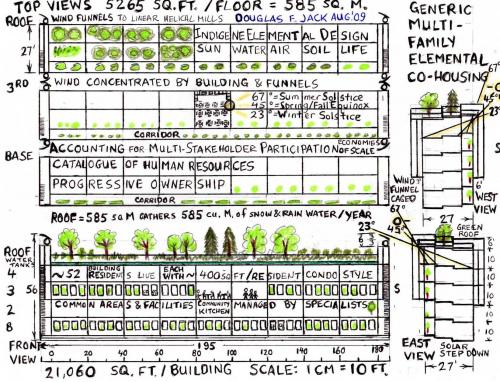
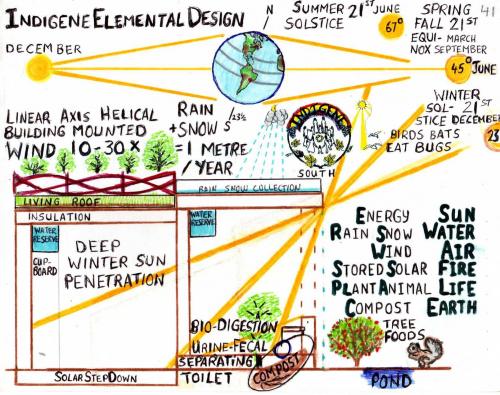
We’re inspired by humanity’s universal indigenous traditions based in multi-family planning, accounting recognition for all labour inputs through ‘Production Societies’ (Guild-like organisations involving progressive ownership from youth to elder involvement). We’re planning for ecological design with sun & other elements, ergonomic with the human body & economic with participant livelihood well-being. We expect to build safe, healthy fire resistant self-sufficient buildings with green-roof, precipitation gathering, urine-fecal separating green humanure toilets, grey water recycling etc. Our internal structuring involves both ‘Consensus’ (‘reaching for common values’ and respecting ‘common interest’) & ‘Caucusing’ (Iroquois = ‘grouping of like interests’ or ‘cultivation of diversity’) among multi-stakeholder Founders, Workers, Suppliers & Consumers. A Human Resource Catalogue facilitates participation among intentional members & larger community. We expect to work within existing economic structures & help them work sustainably.
We work contractually (written agreements), by accounting for contributions at market rates each individual developing credits. Every transaction involves investment through Production Societies. Individuals develop equity ownership (charged at market rates) in condominium units as well as being given the opportunity & accounting recognition for participation in commmon area functions. Our target is to have approximately 100 individuals (35 households)living adjacent (private & independent ‘partements’ at market costs)with opportunities & accounting recognition to contribute to common area functions &
Links:
Economic Participation Welcome
Indigene Community is based in providing organizing tools in the ‘indigenous’ (Latin ‘self-generating’) ‘economy’ (Greek ‘oikos’ = ‘home’ + ‘namein’ = ‘care-&-nurture’) tradition for people right where they live. Our planning is for people cataloguing, exchanging, using & accounting for their talents, goods, services in a Community Investment & Exchange System. CIES called ‘Do-we-know-who-we-are-?’. Our web-programmers are developing Open-Source software for our online web-based Human Resource Catalogue HRC Resource Mapping & accounting for economic transactions in a Community Investment & Exchange System CIES. We work with a community value called a ‘Mem’ (as ‘memory’ for all community contributions), which is based on an hour of work at Quebec minimum-wage. As a system of progressive ownership folks develop ownership in the CIES with their participatory contributions into Founder, Worker, Supplier or Consumer Associations. https://sites.google.com/site/indigenecommunity/structure/9-do-we-know-who-we-are
70% of people live in multihome dwelling complexes (Longhouse/apartment, Pueblo/townhouse & Kanata/village) with an average of 32 dwellings for about 100 people. 100 people is the critical mass all humanity’s worldwide indigenous ancestors sought. 100 people provides economies of scale for self-generating economies around food, shelter, clothing, warmth & health when combined with the worldwide use in Production-Society/Guilds indigenous (string-shell) time-based progressive ownership accounting. RELATIONAL ECONOMY section of our website provides a humber of pages on different aspects of indigenous multistakeholder participatory economic accounting. https://sites.google.com/site/indigenecommunity/relational-economy
Douglas Jack, coordonnateur, Indigene Community / Communauté Indigène et LaSalle-Gardens Mutual-Aid Committee, Comité d’entraide Jardins-LaSalle-Gardens Mutual Aid Committee, Maison de / Home of Dialogue, 9662 rue Jean-Milot, LaSalle-Montreal (Kahnawake-north), Quebec H8R 1X9, Canada 514-365-9594 [email protected] [email protected] Skype: douglas.jack4
Economic Participation Welcome
Indigene Community is based in providing organizing tools in the ‘indigenous’ (Latin ‘self-generating’) ‘economy’ (Greek ‘oikos’ = ‘home’ + ‘namein’ = ‘care-&-nurture’) tradition for people right where they live. Our planning is for people cataloguing, exchanging, using & accounting for their talents, goods, services in a Community Investment & Exchange System. CIES called ‘Do-we-know-who-we-are-?’. Our web-programmers are developing Open-Source software for our online web-based Human Resource Catalogue HRC Resource Mapping & accounting for economic transactions in a Community Investment & Exchange System CIES. We work with a community value called a ‘Mem’ (as ‘memory’ for all community contributions), which is based on an hour of work at Quebec minimum-wage. As a system of progressive ownership folks develop ownership in the CIES with their participatory contributions into Founder, Worker, Supplier or Consumer Associations. https://sites.google.com/site/indigenecommunity/structure/9-do-we-know-who-we-are
70% of people live in multihome dwelling complexes (Longhouse/apartment, Pueblo/townhouse & Kanata/village) with an average of 32 dwellings for about 100 people. 100 people is the critical mass all humanity’s worldwide indigenous ancestors sought. 100 people provides economies of scale for self-generating economies around food, shelter, clothing, warmth & health when combined with the worldwide use in Production-Society/Guilds indigenous (string-shell) time-based progressive ownership accounting. RELATIONAL ECONOMY section of our website provides a humber of pages on different aspects of indigenous multistakeholder participatory economic accounting. https://sites.google.com/site/indigenecommunity/relational-economy
Douglas Jack, coordonnateur, Indigene Community / Communauté Indigène et LaSalle-Gardens Mutual-Aid Committee, Comité d’entraide Jardins-LaSalle-Gardens Mutual Aid Committee, Maison de / Home of Dialogue, 9662 rue Jean-Milot, LaSalle-Montreal (Kahnawake-north), Quebec H8R 1X9, Canada 514-365-9594 [email protected] [email protected] Skype: douglas.jack4
Human Resource accounting for diverse contributions
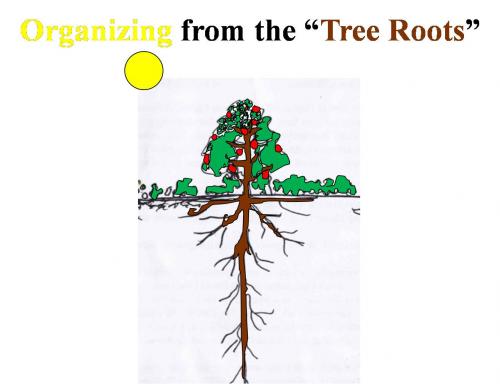
We live on a 40 acre housing development built in 1955 with 700 apartments, 50 townhouses and 108 Habitation Loyer Modique (Average Cost Housing). We are building relational economy for individuals and families to work intentionally with local businesses and each other through a Human Resource Catalogue. We call this organising from the Tree Roots in terms of transforming an existing urban community and developing ownership and stewardship among us.
A few people (not elected by the broader community) make the major decisions.
Members contribute a percentage of income to community funds.
Members with pre-existing debt: Yes
Through the development of a Human Resource Catalogue and a system of Community Investment and Exchange.
Individuals are responsible for their own debts.
Dwelling units are arranged as Condominiums. We charge market rates for units and accord market rates for labour and other contributions. All contributions of money, labour, goods, services or organising labours for Common Areas are accounted for and interchangeable.
Individuals without money may contribute other services.
Condominium ownership by each household or family. Common area fees may be paid by money or other services.
Garden(s), Swimming pond or pool, LaSalle-Gardens is inspired by the Garden-City designs of Frederick Olmstead
There are no needs and offers


Join our newsletter to stay up to date.
{{ item.label }}
{{ item.value ? item.value : currencyFormat( item.amount ) }}
Subtotal
{{ currencyFormat( pricing_summary.total_amount ) }}
There are no results matching your search